



High-quality biomass pellets feature high density, smooth surfaces, and low breakage rates, and these key advantages are the core standard for stable commercial biomass pellet manufacturing. Most biomass pellet manufacturers frequently encounter common pellet production defects, including loose biomass pellets, surface cracks, and molding failures, which render finished fuels unqualified for global industrial and residential biomass fuel markets. The final biomass pellet forming performance is jointly determined by three major core factor categories. Properly controlling these key indicators can significantly boost biomass pellet quality and overall production efficiency for pellet mills.
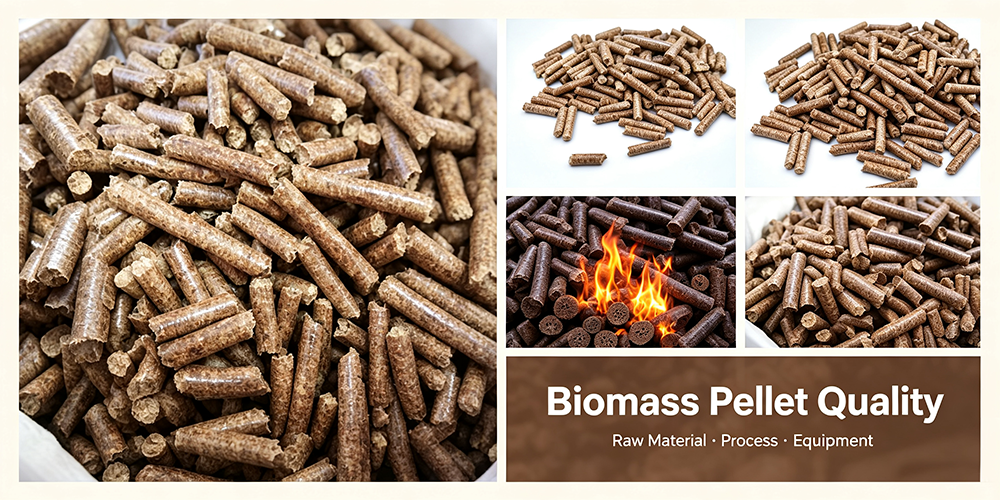
1. Raw Material Properties – Fundamental Factor for Biomass Pellet Molding
Raw material status lays the foundation for smooth biomass pellet molding, with three adjustable core indicators affecting pellet durability:
Moisture content: The optimal moisture level for biomass pelletizing stands at around 20%. Excess moisture restrains lignin melting and results in loose low-density pellets; overly dry raw materials cause rapid equipment wear and produce charred biomass pellet products.
Pellet size: Uniform crushed raw particles sized 6–12 mm support tight material compaction during pelletizing. Large wood or crop fragments create internal gaps inside pellets, while excessive fine powder reduces biomass pellet durability index (PDI).
Biomass material type: Wood biomass with rich lignin delivers outstanding pellet molding performance. Agricultural waste residues such as straw, rice husk, and palm shell require customized pellet mill process parameters to achieve stable forming effects.
2. Production Process Parameters—Core Control Factor for Pellet Density
Thermal compression process parameters directly govern finished biomass pellet density and molding stability:
Molding temperature: Appropriate heating melts natural lignin inside biomass to act as a natural binder, enhancing adhesion between crushed biomass particles.
Compression pressure: Stable continuous compression pressure compacts raw materials tightly. Fluctuating pressure leads to uneven biomass pellets and increases the pellet breakage rate.
Dwell time: Reasonable material retention time inside die holes balances finished pellet density and pellet mill daily output efficiency.
3. Pellet Mill Equipment Operation Status – A Guarantee Factor for Consistent Pelletizing
The working conditions of pellet mill equipment exert a huge impact on long-term biomass pellet forming consistency:
Worn pressing rollers and blocked die holes will drastically damage biomass pellet forming effects and lower finished product quality.
Regular routine inspection and standardized equipment maintenance can sustain stable long-term pellet molding performance and reduce production waste.
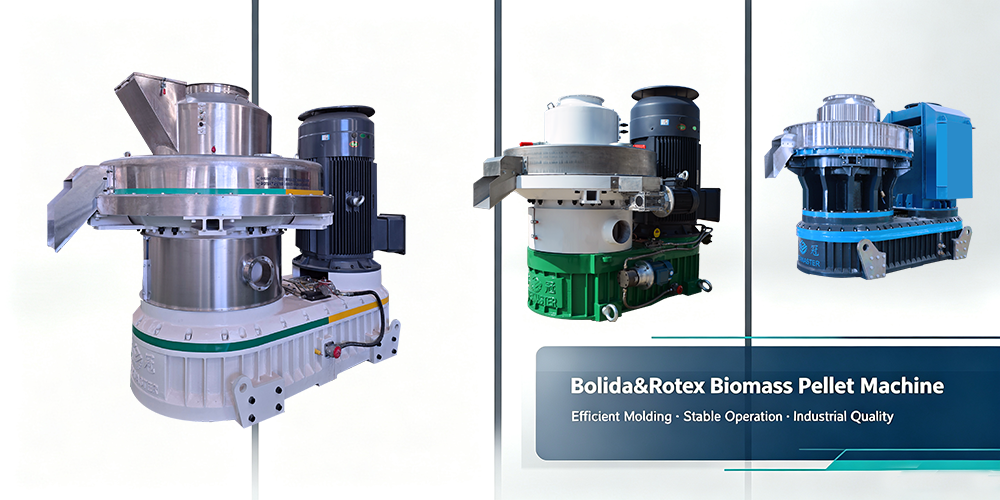
Conclusion: 3 Core Methods to Manufacture Premium Standard Biomass Pellets
1. Strictly monitor raw material indicators;
2. Fine-tune production process parameters accurately;
3. Carry out standardized daily equipment maintenance.
Full optimization of raw materials, production technology, and pellet mill equipment allows biomass fuel manufacturers to produce high-standard biomass pellets that fully meet global industrial and residential biomass fuel market standards.
Name: Christine
Mobile:+86-155 0868 1778
Tel:+86-0531-83658366
Email:info@rotexmaster.com
Add:Zhangqiu City,Shandong Province,China